How Terracotta Watering Spikes Work | SmartiLiving
Learn how terracotta watering spikes work, how porous clay moves moisture into soil, and why they can make watering plants easier.
How Terracotta Watering Spikes Actually Work
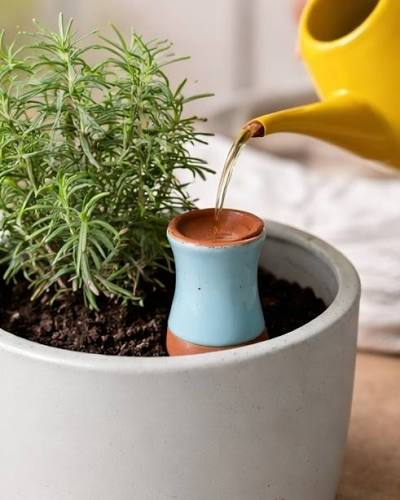


Keeping plants properly watered sounds simple, but maintaining the right moisture level can become difficult when you're busy, traveling, or caring for multiple plants.
That's where terracotta watering spikes come in.
These simple devices use the natural properties of porous clay to gradually provide moisture to the surrounding soil. Unlike electronic irrigation systems, terracotta watering spikes don't require batteries, complicated programming, or pumps.
But how do they actually work?
Let's break down the science behind terracotta watering spikes and explain how they can make plant care easier.
What Are Terracotta Watering Spikes?
Terracotta watering spikes are plant-watering devices made from porous fired clay.
A typical system consists of a terracotta spike that is placed into the soil and a water reservoir that supplies moisture to the spike.
Once installed, water can gradually move through the porous terracotta and into the surrounding soil.
The basic idea is simple:
Water reservoir → Terracotta spike → Soil → Plant roots
SmartiLiving offers terracotta self-watering spikes designed for indoor and outdoor potted plants.
Explore SmartiLiving's Self-Watering System
Why Is Terracotta Used?
The secret is porosity.
Unglazed terracotta contains many tiny pores throughout the clay. These microscopic spaces allow the material to interact with moisture.
You may have noticed that a traditional terracotta plant pot becomes darker after watering.
That's because water can interact with the porous clay.
This same property makes terracotta useful for passive watering systems.
How Do Terracotta Watering Spikes Release Water?
When a terracotta spike is filled with water and placed into soil, moisture can gradually move through the porous clay.
If the surrounding soil is relatively dry, there is a difference in moisture conditions between the inside of the spike and the soil outside.
This can encourage moisture to move through the clay toward the surrounding soil.
The process is affected by several factors, including:
-
Soil moisture
-
Clay porosity
-
Temperature
-
Humidity
-
Soil composition
-
Plant water requirements
-
Water reservoir size
Because of these variables, the rate of water release isn't exactly the same in every situation.
The Science: Capillary Action and Moisture Movement
One of the concepts involved in water movement through porous materials is capillary action.
Capillary action is the movement of liquid through very small spaces.
A common example is a paper towel absorbing water. Water travels through tiny spaces inside the material.
Terracotta also contains microscopic spaces.
When water interacts with these spaces, moisture can move through the clay and into the surrounding environment.
In a plant pot, this can create a gradual source of moisture around the root zone.
Why Doesn't the Water Pour Out Immediately?
A common misconception is that a porous watering spike simply lets water leak rapidly into the soil.
That's not how it works.
Terracotta doesn't contain large holes. Instead, it contains a network of microscopic pores.
These pores restrict the movement of water compared with an open hole.
The surrounding soil also affects the process.
If the soil is already very moist, the moisture difference may be smaller. If the soil becomes drier, the conditions can encourage greater moisture movement.
This is one reason terracotta watering systems are considered passive watering systems.
Do Terracotta Watering Spikes Automatically Know When a Plant Is Thirsty?
No.
Terracotta watering spikes don't contain sensors or electronic controls.
They don't measure soil moisture or communicate with a plant.
Instead, they rely on natural physical processes.
Changes in moisture around the terracotta influence how water moves through the porous clay.
So the term "self-watering" doesn't mean the product thinks for itself.
It means the system can supply moisture passively without requiring you to manually water the plant every time.
How to Set Up a Terracotta Watering Spike
Using a terracotta watering spike is straightforward.
Step 1: Prepare the spike
Follow the manufacturer's instructions before using the product.
SmartiLiving recommends soaking its terracotta watering spikes before initial use.
Step 2: Prepare the soil
Make sure the soil is suitable for your plant and isn't extremely compacted.
Step 3: Insert the spike
Place the spike securely into the soil near the plant's root area.
Avoid damaging major roots when inserting it.
Step 4: Fill the reservoir
Add water according to the product's instructions.
Step 5: Monitor your plant
Watch the soil and plant for several days.
This allows you to understand how quickly the system provides moisture in your particular environment.
How Long Do Terracotta Watering Spikes Last?
There isn't one exact answer because watering conditions vary.
Factors that can affect the duration include:
-
Plant size
-
Plant species
-
Pot size
-
Soil type
-
Temperature
-
Humidity
-
Sunlight
-
Reservoir capacity
SmartiLiving states that its terracotta watering spikes can provide hydration for approximately 7–14 days, depending on conditions.
View SmartiLiving's Terracotta Watering Spikes
Because conditions vary, you should test the watering spike before relying on it during a long vacation.
Are Terracotta Watering Spikes Good for Indoor Plants?
They can be useful for many types of potted indoor plants.
Indoor environments can cause soil to dry at different rates depending on heating, air conditioning, sunlight, humidity, and pot size.
A terracotta watering spike can provide a convenient additional source of moisture without requiring daily manual watering.
They can be useful for:
-
Houseplants
-
Herbs
-
Flowers
-
Small container plants
-
Balcony plants
-
Patio plants
However, plant watering requirements are different from species to species.
What About Outdoor Plants?
Terracotta watering spikes can also be used with many outdoor container plants.
Outdoor conditions can make watering even more challenging because sunlight, wind, temperature, and evaporation can increase water loss.
A passive watering system can help reduce the amount of manual watering required.
However, outdoor plants should still be monitored because environmental conditions can change quickly.
Can Terracotta Watering Spikes Prevent Overwatering?
Not automatically.
A terracotta watering spike is a watering tool, not a guarantee against overwatering.
The plant's needs still matter.
A cactus, succulent, herb, tropical plant, and flowering plant may all require different amounts of moisture.
Before installing a watering spike, consider:
-
Plant type
-
Soil type
-
Drainage
-
Pot size
-
Light conditions
-
Temperature
-
Humidity
Always monitor your plant after installation.
Terracotta Watering Spikes vs. Traditional Watering
Traditional watering requires you to manually add water to your plants.
That's simple and effective, but it requires consistency.
Terracotta watering spikes provide another approach.
Traditional watering
-
Manual
-
Requires regular attention
-
Gives direct control
-
Simple for a small number of plants
Terracotta watering spikes
-
Passive
-
Reduces frequent manual watering
-
Useful for busy plant owners
-
Can be helpful while traveling
-
Uses porous terracotta
Neither method is right for every plant or situation.
The best choice depends on your plants and environment.
Terracotta vs. Plastic Watering Spikes
Terracotta and plastic watering products behave differently.
Terracotta
-
Naturally porous
-
Made from clay
-
Can interact with moisture
-
Supports passive moisture movement
Plastic
-
Generally non-porous
-
Lightweight
-
Durable
-
Doesn't naturally allow water to pass through its surface
Terracotta's porous nature is the main reason it is used in passive watering applications.
Why Test Your Watering Spike Before Vacation?
If you're planning to leave your plants alone for several days or weeks, testing is extremely important.
Don't install a new watering system for the first time immediately before your trip.
Instead, test it while you're still home.
Monitor:
-
How quickly the reservoir empties
-
How wet the soil remains
-
How the plant looks
-
Whether the spike stays securely positioned
-
Whether the plant appears to need more or less moisture
This gives you an opportunity to adjust your setup before you leave.
Tips for Getting Better Results
To get the most from a terracotta watering spike:
Choose the right size
Match the watering system to your pot and plant.
Use appropriate soil
Good soil structure allows water and air to move around the roots.
Position the spike carefully
Place it close enough to the root zone to provide useful moisture without damaging roots.
Monitor moisture
Don't assume that every plant needs the same amount of water.
Test before traveling
Always test your setup before leaving your plants unattended.
Who Can Benefit From Terracotta Watering Spikes?
Terracotta watering spikes can be especially convenient for people who:
-
Travel frequently
-
Have busy schedules
-
Own multiple plants
-
Sometimes forget to water
-
Want to reduce daily plant-care tasks
-
Have indoor container plants
-
Maintain balcony or patio plants
They provide a simple way to make regular plant care more convenient.
The Simple Idea Behind the Technology
The interesting thing about terracotta watering spikes is that they don't need complicated technology.
There are no batteries.
There are no apps.
There are no electronic sensors.
Instead, the system takes advantage of the natural properties of porous clay.
Water interacts with the terracotta, moisture moves through the material, and the surrounding soil receives gradual moisture.
It's a simple concept based on basic physical processes.
Final Thoughts
So, how do terracotta watering spikes actually work?
They use porous terracotta to create a passive connection between a water reservoir and the surrounding soil.
Moisture can gradually move through the tiny pores in the clay, with the rate influenced by soil moisture, environmental conditions, and the needs of the plant.
This makes terracotta watering spikes a convenient option for people who want to reduce frequent manual watering.
They can be particularly useful for indoor plants, container gardens, balconies, patios, and situations where you may be away from home.
SmartiLiving combines the traditional properties of terracotta with modern self-watering designs to make everyday plant care easier.
Simple clay. Natural moisture movement. Less daily watering.
What's Your Reaction?